Is your body holding onto the day's stress long after you've climbed into bed? You try to shut your brain off, but your shoulders are up by your ears and your jaw is clenched. It’s frustrating when you’re mentally exhausted but physically too tense to sleep. You're not alone in this, and there's a simple fix that doesn't involve counting sheep.
"Imagine having a remote control for your body's tension. That's what Progressive Muscle Relaxation gives you—the power to consciously release stress and signal to your brain that it's finally time to rest."
Why Your Tense Body Is Sabotaging Your Sleep (And How to Fix It)
Lying in bed, feeling physically tense and mentally wired, is a recipe for a sleepless night. This physical tension keeps your nervous system in a state of high alert, making it nearly impossible to drift off. But what if you could manually flip the switch from "stressed" to "sleep"?
That's exactly what Progressive Muscle Relaxation (PMR) does. It’s a powerful technique that teaches you to consciously release physical tension, one muscle group at a time. By doing this, you send a clear message to your brain that the day is over and it's safe to power down. This guide will walk you through how to master PMR and make it a nightly ritual. For those looking to support this process from the inside, combining the practice with targeted nutritional support can be incredibly effective.
The Science of 'Tense and Release': How PMR Rewires Your Brain for Sleep
So, how does simply tensing and releasing your muscles work so well? The technique was developed by Dr. Edmund Jacobson, who realized that you can't be physically relaxed and mentally anxious at the same time. PMR is a systematic way to achieve deep physical calm, which then leads to mental quiet.
It all comes down to your nervous system. When you're stressed, your sympathetic nervous system—the "fight or flight" response—is active. Your heart rate is up, your muscles are tight, and you're ready for action, not sleep. PMR helps activate its counterpart, the parasympathetic nervous system, also known as the "rest and digest" state. By tensing a muscle, you increase the tension even more for a few seconds. Then, when you release it, the muscle relaxes more deeply than it was before. This physical release triggers a switch, lowering your heart rate, slowing your breathing, and telling your body it's safe to rest. This practice is even shown to help increase slow-wave sleep, which is the most restorative stage of sleep your body needs.
A Step-by-Step Guided Script for Progressive Muscle Relaxation
Ready to try it? Find a comfortable position, lying on your back with your arms at your sides. Close your eyes and take a few slow, deep breaths. The goal is to feel the tension without straining. Let's begin, starting from your toes and working our way up.
Feet and Toes
Breathe in and gently curl your toes downward, tensing the arches of your feet. Hold for about 5 seconds. Feel the tension. Now, breathe out and release completely. Notice how the tension melts away and a feeling of warmth or heaviness spreads through your feet.
Lower Legs
Inhale and point your toes up toward your head, tensing your calf muscles. Hold this for 5 seconds. Don't strain. Now, exhale and let your feet drop back into a relaxed position. Notice the difference between the tension and the release.
Thighs and Hips
Take a deep breath in and gently squeeze your thigh muscles and clench your buttocks. Hold it for 5 seconds. Feel the muscles tighten. Now, breathe out and let all that tension go. Feel your legs become heavy and relaxed against the bed.
Stomach
Breathe in and gently tighten your abdominal muscles, as if you're bracing for a tickle. Hold for 5 seconds. Now, exhale and release, letting your belly soften completely. Feel the wave of relaxation.
Hands and Arms
Inhale and make a gentle fist with both hands, tensing your hands, forearms, and biceps. Hold for 5 seconds. Feel the tightness. As you exhale, open your hands and let your arms go limp at your sides. Notice the feeling of warmth spreading down to your fingertips.
Shoulders and Neck
This is where many of us hold stress. Inhale and gently shrug your shoulders up toward your ears. Be careful not to strain your neck. Hold it. Now, breathe out and let your shoulders drop completely. Feel the weight of the day falling away from them.
Face and Jaw
Finally, bring your attention to your face. Inhale and gently scrunch up your face—furrow your brow, squint your eyes, and clench your jaw slightly. Hold for 5 seconds. Exhale with a sigh and relax every muscle in your face. Let your jaw hang loose and your forehead smooth out. Continue to breathe slowly and deeply, enjoying the feeling of total body relaxation.
Tips for Success: Making PMR a Powerful Nightly Ritual
Like any new skill, PMR becomes more effective with practice. Here are a few tips to help you get the most out of your new nightly ritual:
- Be Consistent: Try to do PMR every night for the first couple of weeks. Think of it as training your body to relax on command. The more you do it, the faster and deeper you'll be able to relax.
- Create a Calm Space: Make sure your bedroom is dark, quiet, and cool. Comfortable clothing is a must. The fewer distractions you have, the easier it will be to focus on the sensations in your body.
- Don't Try Too Hard: The key is gentle tension, not forceful straining. If you experience a muscle cramp, you're tensing too hard. Ease up and focus on the feeling of release.
- Let Thoughts Drift By: Your mind will wander. That's okay! When you notice it happening, just gently guide your focus back to the muscle group you're working on. No judgment needed.
- Falling Asleep is a Win: If you fall asleep in the middle of the exercise... congratulations! It means the technique is working perfectly.
Enhance Your Results: Pairing PMR with Targeted Nutritional Support
While PMR works to relax your body from the outside-in, you can support your results by helping your body calm down from the inside-out. Creating the right internal environment for relaxation can make your nightly practice even more effective.
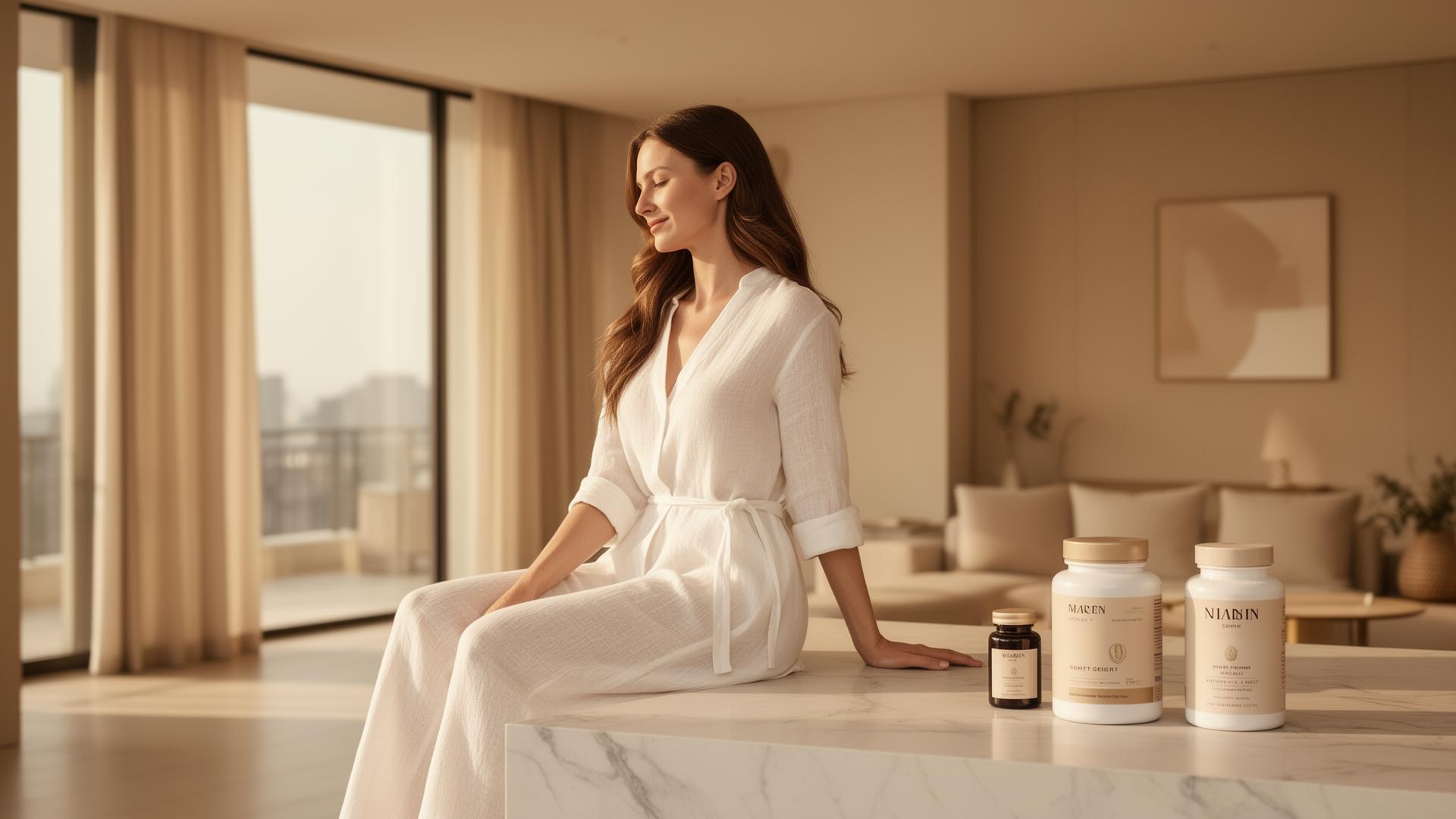
That's where a well-formulated supplement can make a difference. NuviaLab Relax is a food supplement designed to support a good mood and emotional balance. Its formula was created to help you relax and maintain a state of calmness.
The effective action of NuviaLab Relax comes from a combination of 10 natural ingredients that work together. These ingredients help induce a feeling of calm, have an adaptogenic effect, support cognitive abilities, and contribute to improving sleep quality. Pairing the physical practice of PMR with the internal support of NuviaLab Relax can create a powerful synergy, helping your body and mind fully prepare for deep, restorative sleep.
Discover How NuviaLab Relax Can Deepen Your Relaxation
Frequently Asked Questions (FAQ)
How long does it take for PMR to work?
Some people feel a sense of calm and fall asleep faster the very first time they try it. For others, it takes a bit of practice. Generally, the cumulative benefits build over one to two weeks of consistent nightly practice.
Can I do this if I have anxiety?
Yes, PMR is a highly recommended relaxation technique for anxiety. It helps get you out of your head and into your body, interrupting the cycle of anxious thoughts. Just remember to start gently and never tense a muscle to the point of pain.
What's the difference between PMR and meditation?
That's a great question. While both aim to calm the mind, their focus is different. Most meditation practices are mind-focused, training you to observe your thoughts. PMR is body-focused, using physical action (tensing and releasing) as the primary tool to quiet the mind.
When should I see a doctor about my sleep problems?
If your sleep problems are severe, have been going on for a long time, and are negatively impacting your daily life, it's a good idea to talk to a doctor. This is especially true if you've tried techniques like PMR and other lifestyle changes without seeing improvement.
Your Path to Restful Nights Starts Tonight
You now have a powerful, simple, and effective tool to combat nightly tension. You have the power to calm your body and quiet your mind for sleep using Progressive Muscle Relaxation. It's a skill that puts you back in control.
By making this a consistent practice, you are actively training your body for better rest. And by combining the physical practice of PMR with the internal calming support of a well-formulated supplement like NuviaLab Relax, you create a holistic approach to conquering sleepless nights. Why not take the first step on your journey to better sleep tonight?